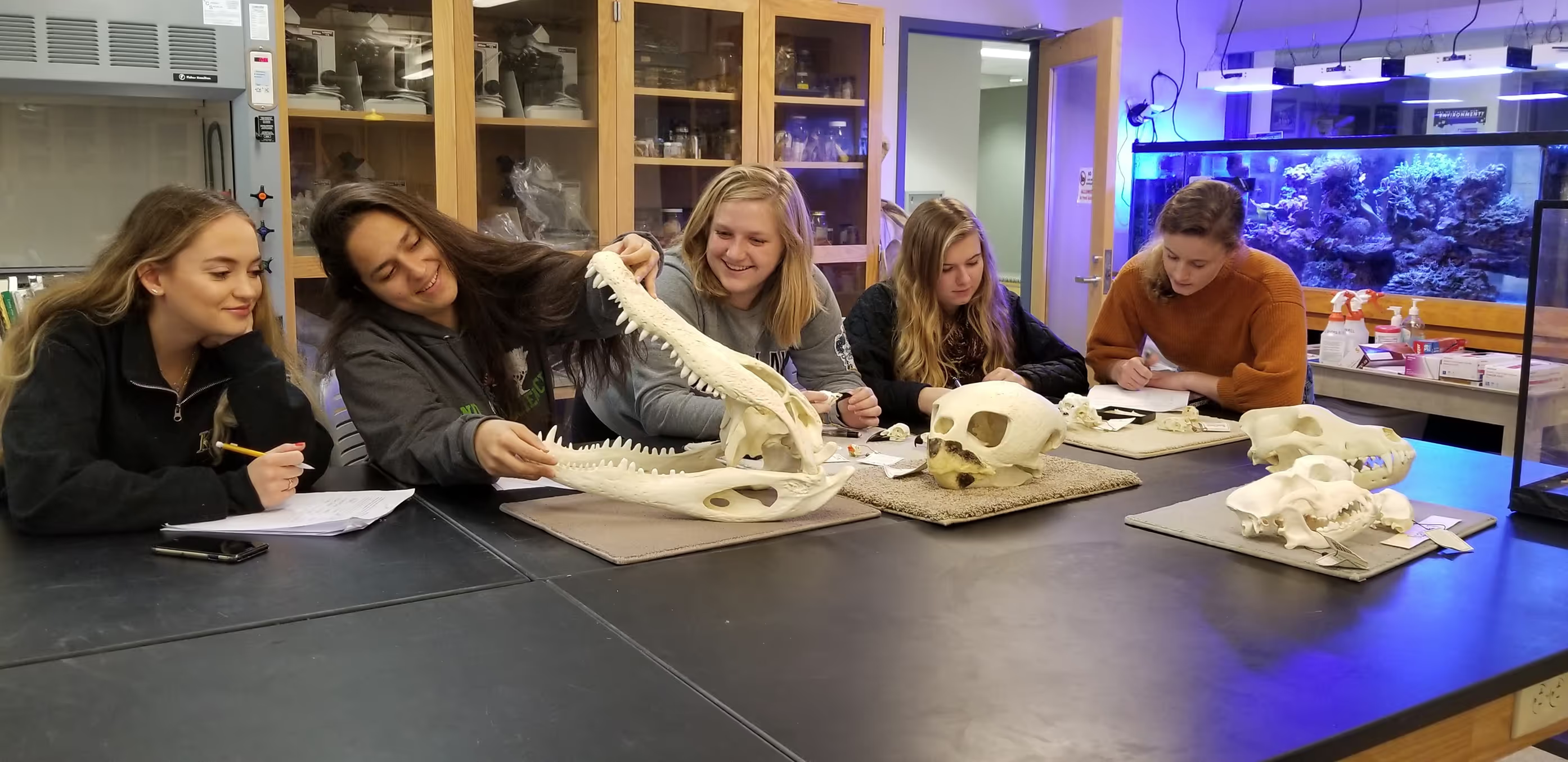

Initiating Institutional Transformation
From classroom practices to institutional transformation, the SCIENCE Collaborative is creating lasting impact for students and educators.
Transforming Institutions
The SCIENCE Collaborative approach targets three critical areas of institutional change. We envision a future where institutional structures actively support student success in STEM.
Community Culture
Pathways to Success
Coursework and Academic
Opportunities
How We Create Change
We believe institutional transformation requires:
Student Level:
Students experience improved learning environments, receive better support, develop stronger sense of belonging, and persist in STEM.
Educator Level:
Faculty gain new pedagogical skills, join communities of practice, receive ongoing implementation support, and share practices with colleagues.
Institutional Level:
Departments create supportive structures, administrators allocate resources, assessment systems track outcomes, and evidence-based practices become embedded in institutional culture.
Network Level:
Institutions share knowledge rapidly, adapt practices across contexts, collectively solve implementation challenges, and scale effective approaches.
When changes happen at all four levels simultaneously, transformation becomes sustainable rather than dependent on individual champions.
Evidence of Impact Across the Network
Real stories of transformation and achievement.
Why Traditional Grading is getting an F
Otterbein University is leading a national movement in STEM education by implementing alternative grading methods.
Students as Partners at University of Iowa
A program that brings student voices into course design to transform large lecture courses into active, engaging learning environments.
Students as Partners at Xavier University
Enhancing student success, particularly in introductory STEM courses, by fostering collaboration between faculty members and students.
Pedagogical Partnership Program at UNM-Valencia Campus
The Pedagogical Partnership Program (3P) offers support for student engagement with benefits for both students and faculty.
Growth-Oriented Assessment for Learning Framework
GOAL is a forward-looking framework for assessment that educators can explore and adopt.
Latest from SCIENCE Collaborative
Follow recent updates, events, and shared work from the SCIENCE Collaborative network.
Join Us in This Work
Whether you're an educator interested in these teaching approaches, a funder aligned with our mission, or an institution seeking to improve student success, we'd love to connect.